top of page

The Story Behind the Photo

  • Mar 21
  • 2 min read

Updated: Mar 23

Camera: Nikon D800, Lens: Nikon 14-24mm f/2.8

Settings: 1.6 seconds, f/13, ISO 100

Filters: Circular Polarizer, ND Grad Filters


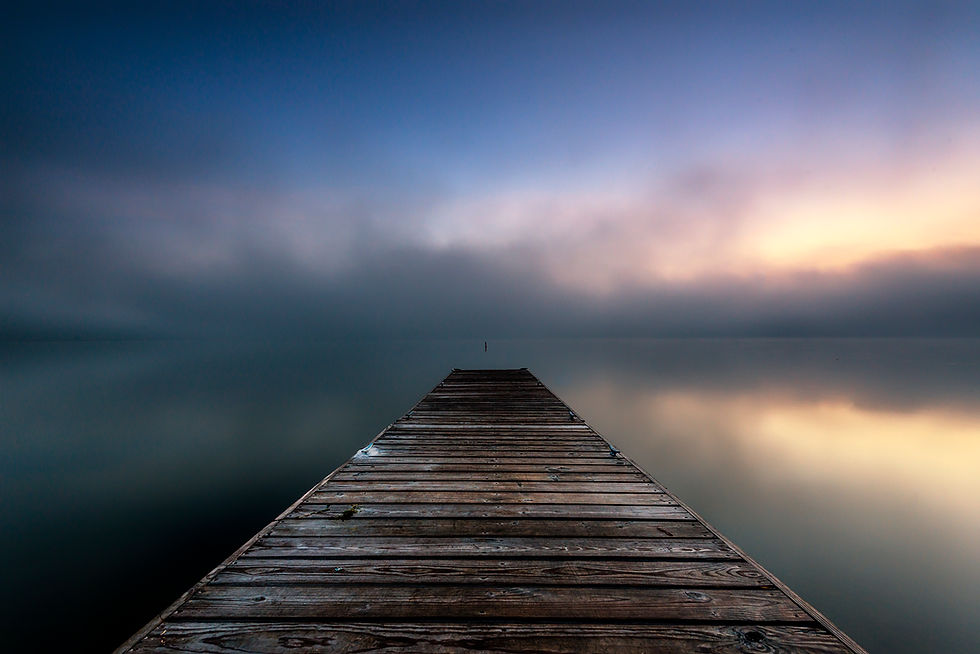
From the first day I discovered this dock, I was drawn to it. It faces north-northeast, offering an almost wide open view of the eastern sky over Lake Kegonsa—ideal for sunrise photography, especially in the summer. Another bonus is how close it is—just two miles from home. There have even been mornings when I’ve spotted a promising sky from my window and made it there in time to capture a few shots.


Camera: Nikon D800, Lens: Nikon 14-24mm f/2.8

Settings: 1 second, f/13, ISO 100

Filters: Circular Polarizer, ND Grad Filters


There is one challenge, though. Amundson Landing in Stoughton, Wisconsin, tends to get busy early, as anglers arrive hoping for the catch of the day. Just before sunrise, the first vehicle with a boat appears, then another, and another. It becomes a balancing act—waiting for one boat to launch while quickly taking photos before the next arrives. While I’ve occasionally included boats in my images, I much prefer capturing the quiet calm of Lake Kegonsa before most people are awake.


Camera: Nikon D800, Lens: Nikon 14-24mm f/2.8

Settings: 1/13 second, f/13, ISO 50

Filters: Circular Polarizer, ND Grad Filters


I’ve also managed, after many attempts, to photograph a passing storm here. It’s not easy—often I have to wait in the car while rain and lightning move through before I can step out and shoot.


Camera: Nikon D800, Lens: Samyang AE 14mm f/2.8

Settings: 1.6 seconds, f/13, ISO 2500

Filters: Circular Polarizer, ND Grad Filters


What keeps me coming back is how much the scene changes from day to day. The colors can range from bold and vibrant to soft pastels, always offering something new.


Camera: Nikon D800, Lens: Nikon 14-24mm f/2.8

Settings: 3 seconds, f/13, ISO 160

Filters: Circular Polarizer, ND Grad Filter


Add a layer of fog on the horizon, and the lake and sky seem to blend into one.


Camera: Nikon D800, Lens: Nikon 14-24mm f/2.8

Settings: 2 seconds, f/13, ISO 320

Filters: Circular Polarizer, ND Grad Filter


It’s been a while since my last visit, but I plan to return more often this year. It just takes an early start—sometimes as early as 4:15 a.m.—to beat the crowds and have time to set up, settle in, and capture the shifting light of dawn.


  • Mar 15
  • 4 min read

Updated: Mar 16


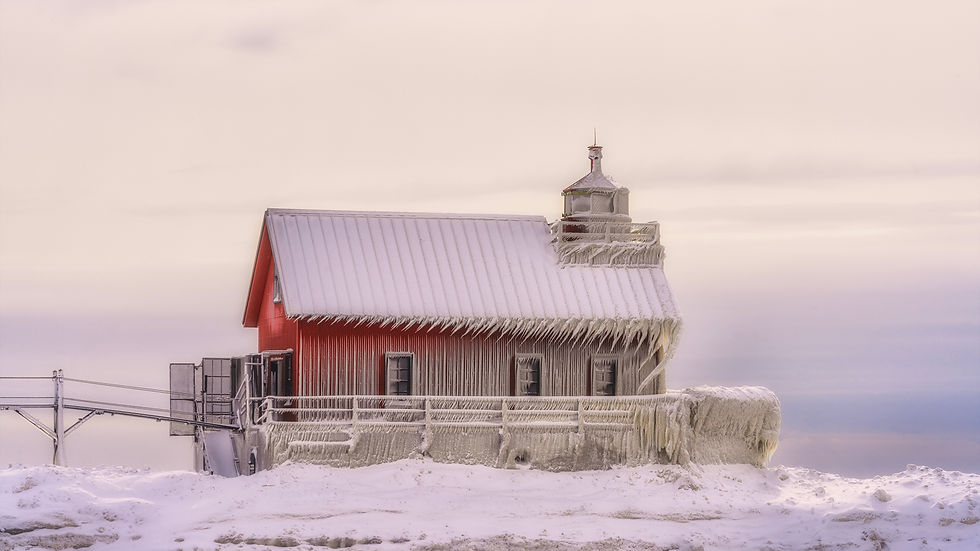
Camera: Sony A74 IV, Lens: Tamron 70-180mm 2.8

Settings: 1/1000 seconds, f/9, ISO 640


Since the first time I saw photographs of the St. Joseph Lighthouse covered in ice, I knew it was a scene I had to capture for myself. Lighthouses are fascinating structures and make compelling subjects for landscape photography, whether captured in a photograph, drawing, or painting. Perhaps it’s because they often stand isolated, tall and watchful, guiding ships along the shoreline.


During periods of high wind, waves from Lake Michigan crash against the lighthouse, and when temperatures drop low enough, the water slowly freezes onto the structure. Over time, the lighthouse becomes encased in thick layers of ice. It’s a rare and unusual event that only a handful of lighthouses experience.


The St. Joseph Lighthouse sits along the southwestern coast of Michigan, about a five-hour drive away. Because of the distance, careful planning is required to photograph it in the right conditions. Prior to 2024, I had traveled there three different winters hoping to capture the lighthouse covered in ice, but none of those trips worked out. Timing is everything, especially when temperatures don’t stay below freezing for long.


On January 18, 2024, I decided to make the trip to photograph both the St. Joseph and Grand Haven Lighthouses, which sits about an hour and a half farther north. I was joined by fellow landscape photographer and Four Elements Photo Adventures instructor Mike Murray, along with Robert McGaffin, Creative Director and Co-Founder of Wheel Hub Magazine.


Camera: Sony A74 IV, Lens: Tamron 70-180mm 2.8

Settings: 1/400 seconds, f/11, ISO 400


The conditions were nearly perfect—below freezing, but not brutally cold. At 26°F with light winds, it was actually quite comfortable considering how harsh the weather can be along the lakeshore. We spent the entire day photographing both lighthouses, capturing their beauty under the icy conditions.


This winter I decided to return after hearing that the southwestern Michigan shoreline had experienced nearly a week of strong winds and extremely cold temperatures—conditions that often create dramatic ice formations. On January 24, 2026, I took a half day off from work so I could leave early and avoid Chicago traffic on the drive to Michigan.


This time the plan was more ambitious. I intended to spend the weekend photographing five different lighthouses coated in ice, traveling as far north as the Point Betsie Lighthouse in Frankfort, Michigan. The trip would be 458 miles each way, and the weather forecast suggested it would not be easy. Snow was expected throughout the region and road conditions were likely to be poor.


The conditions changed quickly once I crossed into Indiana. What had been sunny skies turned icy within minutes. Interstate 90/94 had essentially become an ice rink, and my entire drive across Indiana was done at no more than 35 miles per hour. Once I crossed into Michigan, heavy snow began to fall. However, I was relieved—it was safer driving through fresh snow than on ice.


I went straight to the St. Joseph Lighthouse, but visibility was nearly zero. It was clear the best plan was to get some rest and return before sunrise the next morning.


Camera: Sony A74 IV, Lens: Tamron 150-500mm F5-6.7

Settings: 1/4 seconds, f/16, ISO 160


Saturday morning I headed back to the lighthouse. The conditions were far harsher than they had been in 2024. The temperature was -2°F when I arrived, with a wind chill of -13°F. While extremely cold, it was actually milder than just a few days earlier when the area experienced winds near 50 mph and wind chills approaching -40°F.


But these are the conditions that create the incredible ice formations I had come to photograph. The lighthouse was beautifully frozen, and I was also able to photograph the St. Joseph South Pier beacon completely encased in ice.


Camera: Sony A74 IV, Lens: Tamron 150-500mm F5-6.7

Settings: 1/15 seconds, f/16, ISO 160


Camera: Sony A74 IV, Lens: Tamron 150-500mm F5-6.7

Settings: 1/13 seconds, f/16, ISO 160


Camera: Sony A74 IV, Lens: Sony 12-24mm f2.8

Settings: 1/40 seconds, f/22, ISO 50


After spending a couple of hours photographing the lighthouse, I prepared to continue my trip north. Before leaving, I ran into fellow Wisconsin photographer David Enriquez Lopez, who had just arrived. It was a great opportunity to warm up a bit and talk photography.


David and I made plans to meet again in Grand Haven to photograph the lighthouse there together. The drive north proved just as challenging, with long stretches of icy roads. Once again, I kept my speed below 35 mph, turning what is normally a 90-minute drive into a little over two hours. Along the way, I made a brief stop at the South Haven Lighthouse. It was also coated in ice, though not nearly as dramatically as the others.


Camera: Sony A74 IV, Lens: Tamron 150-500mm F5-6.7

Settings: 1/125 seconds, f/22, ISO 50


After about an hour photographing the Grand Haven Lighthouse, we decided it was time to begin the trip back to Wisconsin. Road conditions were not improving, and another major snowstorm was expected later that evening.


Unfortunately, I wasn’t able to reach the Point Betsie Lighthouse on this trip. But the goal remains, and it will certainly be part of my plans for future winters.


  • Mar 7
  • 2 min read

Updated: Mar 16

Camera: Nikon D800, Lens: Nikon 14-24mm f/2.8

Settings: 10 seconds, f/3.2, ISO 1600

Sometimes capturing a great image takes a little luck. This was one of those times.

Before this night, I had photographed the Northern Lights during very faint displays—sometimes so faint they weren’t even visible to the naked eye. I had only begun learning about auroras and how to photograph them in 2015, and with every outing, my excitement grew.


On Mother’s Day in 2016, at approximately 5:00 PM, I traveled to the Minnesota North Shore—a scenic 154-mile stretch along Lake Superior from Duluth to Grand Portage—to photograph the Milky Way. I was joined by fellow landscape photographer and Four Elements Photo Adventures instructor, Dave Miess. We packed up and began the six-hour drive to Split Rock Lighthouse State Park, just outside the town of Silver Bay.


At the time, although I was very interested in the Northern Lights, I didn’t regularly follow aurora alerts. They also weren’t widely broadcast in the media the way they are today.


Once there, we set up our gear to photograph the night sky. Some clouds lingered, partially blocking our view of the Milky Way’s core. We also noticed a faint green glow in the sky, which we initially assumed was airglow. Airglow occurs when atoms and molecules in the upper atmosphere, energized by sunlight, release light as they shed excess energy. While it resembles auroras, airglow is caused by everyday solar radiation, whereas auroras are driven by high-energy particles from the solar wind.


After about 45 minutes of shooting and waiting for the clouds to clear, everything changed—the Northern Lights suddenly intensified.


Camera: Nikon D800, Lens: Nikon 14-24mm f/2.8

Settings: 13 seconds, f/2.8, ISO 1600


We were witnessing a G3-class geomagnetic storm. On a scale from G1 (minor) to G5 (extreme), a G3 storm is considered strong. It occurs when there is a major disturbance in Earth’s magnetosphere, allowing an efficient transfer of energy from the solar wind into Earth’s space environment. This particular storm was powerful enough to make the aurora visible even in some southern states.


Camera: Nikon D800, Lens: Nikon 14-24mm f/2.8

Settings: 10 seconds, f/3.2, ISO 1600


After hours of photographing, the aurora display ended at around 4:00 a.m. We were in awe—completely mesmerized by the show—and thrilled with the images we had captured.


What began as a plan to photograph the Milky Way turned into an unforgettable night under a spectacular light show. For 8 years it was known as the "Mother's Day Solar Storm" until 2024, when Mother Nature gave us a G5 storm on...Mother's Day.


© Copyright Cassius J. Callender Photography
  • Facebook
  • Instagram
bottom of page